DLP Wasn't Built for AI. Here Are 10 Reasons It Shows.
Traditional DLP was designed to police files crossing a network boundary. AI doesn't live there. Here is what your security team actually needs.
.png)
Ninety percent of AI usage across the average organization is untracked, ungoverned and unsecured. Ninety-seven percent of organizations using generative AI have already faced a breach or security incident linked to it.
If those numbers feel uncomfortable, it is because the tools most security teams reach for first were not built for this problem. Data Loss Prevention is the obvious example. DLP solved a real problem for a different era. It watches files, email and endpoints. It does not see the AI ecosystem now embedded across every part of the business.
This is not a knock on DLP. It is a category boundary. Securing AI requires a category built for AI. Here are 10 reasons FireTail's approach outperforms traditional DLP for managing AI adoption.

1. Built for AI-specific threats, not retrofitted
DLP tools were designed to protect data moving across networks, email and endpoints. It has no native concept of LLM interactions, prompt injection, model misconfigurations or AI-specific attack vectors like jailbreaks and replay attacks. FireTail was purpose-built for this threat landscape. The OWASP LLM Top 10 and MITRE ATLAS frameworks did not exist when DLP was conceived. FireTail was designed around them.

2. Discovers shadow AI you don't know exists
DLP can only protect data flows it is already aware of. FireTail's continuous discovery runs across cloud, code and browsers to surface AI usage that IT and security teams never sanctioned or catalogued. That is the 90 percent of AI usage effectively invisible to traditional tools. You cannot govern what you cannot see. FireTail makes it visible.

3. Understands what's inside AI conversations
DLP inspects files and data transfers. FireTail captures and analyzes the content of AI interactions: prompts, model responses, token counts and system instructions. This gives security teams visibility into what employees and systems are actually saying to AI models. Not just what data moved, but what was asked, what was returned and whether it should have been.

4. Detects PII leakage in real time within AI logs
Traditional DLP can flag a file containing PII being sent somewhere. FireTail detects when sensitive or regulated data is passed to an AI model in a prompt or returned in a response. That is a data exposure pattern DLP was never designed to catch. PII inside a conversation with a foundation model is not a file transfer. It is a new exposure class, and it needs new detection.

5. Enables governance, not just blocking
DLP is largely binary. Allow or block. FireTail's policy engine lets GRC teams build nuanced AI usage frameworks. Approved models. Approved regions. Approved providers. Alerts when violations occur. This supports compliance with GDPR, the EU AI Act and emerging standards without shutting down AI adoption. Governance that enables, rather than blocks, is the difference between security being seen as a partner or an obstacle.

6. Maps findings to AI-specific compliance frameworks
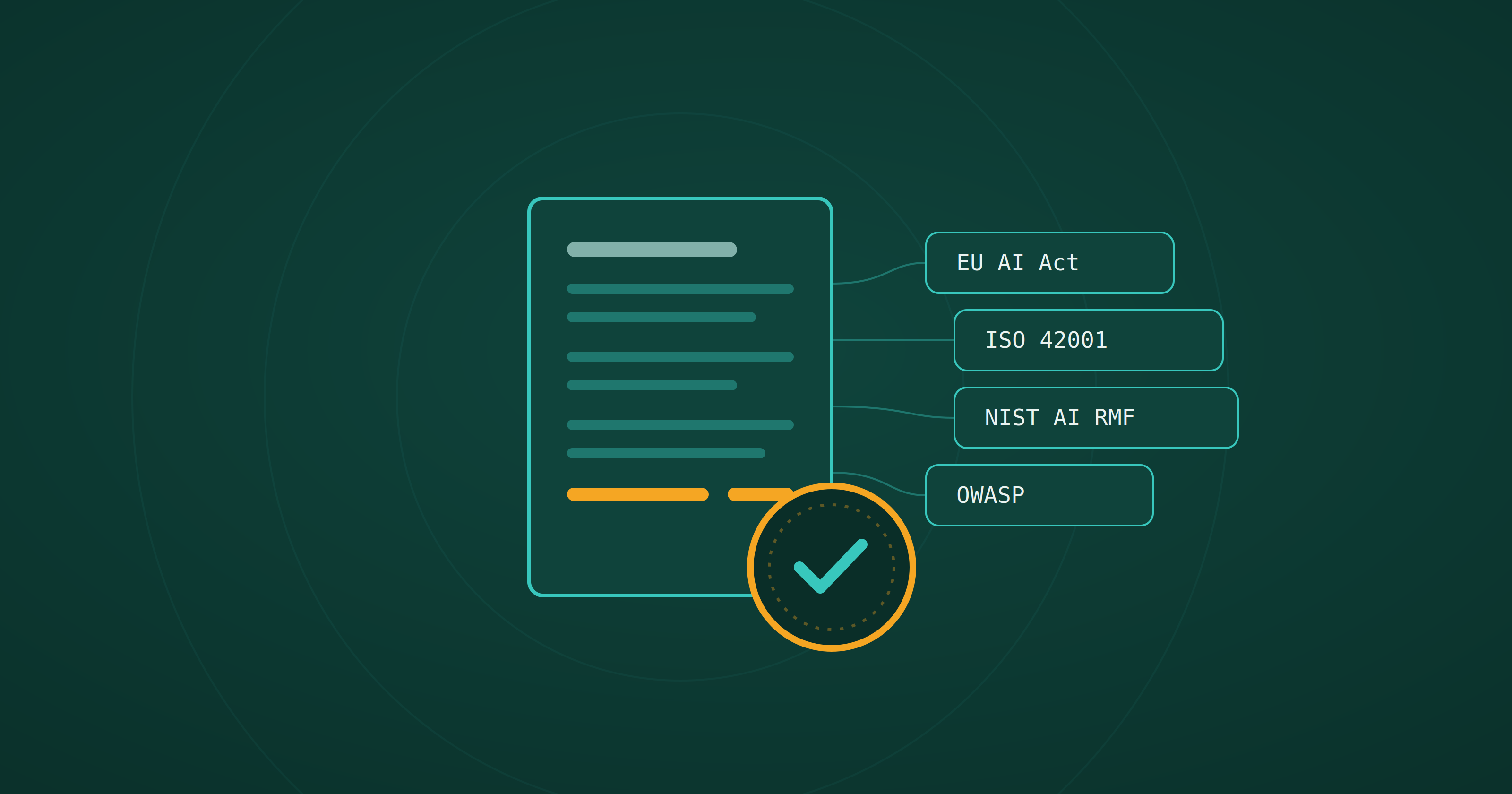
FireTail surfaces findings mapped to OWASP AI 2025 and MITRE ATLAS. These frameworks did not exist when DLP was conceived. Security and compliance teams get context to prioritize and remediate risks in language that regulators and auditors increasingly expect. When the auditor asks how you align to OWASP LLM01 or AML.T0051, you have an answer ready.

7. Proactively tests AI models for vulnerabilities
DLP is reactive. It responds to data in motion. FireTail actively probes deployed LLMs on a schedule to find vulnerabilities before they are exploited. That includes susceptibility to prompt injection, ANSI exploits, harmful content generation and replay attacks. Continuous testing is now a basic expectation for any production AI system. DLP does not do it. FireTail does.

8. Covers the full AI stack, not just the perimeter
DLP monitors network egress points. AI risk lives across a wider surface. Inside cloud infrastructure. Embedded in code repositories. Accessed through browsers. Invoked via APIs. FireTail covers every one of these vectors simultaneously, across both Workforce AI and Workload AI. Most AI security tools address one or the other. Securing the modern organization means securing both.

9. Provides an actionable AI asset inventory
DLP has no concept of an AI model inventory. FireTail builds and maintains a living catalog of every AI model, prompt, SDK dependency and integration across the organization. That is foundational context DLP cannot provide and that governance teams need. You cannot defend, audit or rationalize an AI footprint you have not mapped.

10. Designed to enable AI adoption, not block it
The philosophical difference matters. DLP defaults toward restriction. FireTail is built to help organizations say yes to AI safely. The goal is to give security teams the visibility and confidence to approve AI initiatives, not reflexively deny them. That directly supports business competitiveness. In a market where AI adoption is now a top spending priority for CISOs and the board, security teams that can enable AI are the ones who keep their seat at the table.
The bottom line
DLP solves a problem. It does not solve this one. AI introduces a new attack surface with new actors, new data flows and new failure modes. Treating it as a file transfer problem leaves the 90 percent of AI usage that is shadow AI completely uncovered, and it leaves your governance posture exposed to the next OWASP LLM finding or EU AI Act audit.
Securing AI adoption requires a platform built around AI from day one. Visibility across every model and interaction. Centralized logging with real-time detection. Continuous testing of every deployed model. Policy and governance that enable, not block.
That is the standard. Anything less is asking a network-era tool to solve an AI-era problem.

.png)