AI Governance for Law Firms: From Policy to Proof
AI is already inside every firm. The harder question for security and compliance leaders is whether they can see what's being used, govern how it's used, and produce a record of it when a client, a court, or a regulator asks.

A junior associate pastes a deposition transcript into ChatGPT to summarise it before a 9am call. A partner uses a consumer LLM to brainstorm settlement positions on a live matter. A paralegal drops a draft complaint into a free AI tool to tighten the prose. An AI agent quietly queries the document management system overnight to pull together a closing checklist.
None of it shows up in your security team's logs.
That's the AI reality inside every firm in 2026. Adoption is happening at every level, mostly through tools your security team did not approve and cannot see. In a profession built on privilege and confidentiality, the gap between what's being used and what can be accounted for has stopped being a theoretical problem.
What it already looks like when the gap stays open
These are real incidents that show what happens when a firm has no visibility into AI usage. No hallucination cases here. Every one is a security or governance failure that visibility and policy would have prevented or caught.
The thread running through all five is the same. The AI usage was invisible right up until someone outside the firm forced it into the open. A researcher. A court. Opposing counsel. A client. By then, the firm is no longer in control of the narrative.
The pressure is now coming from three directions.
In law, the AI question has shifted from "are we using it" to "can you prove how." And the people asking are no longer hypothetical.
Clients are putting it in writing.
The Association of Corporate Counsel has published a Sample AI Guideline for Outside Counsel and a companion Top 10 GenAI Transparency & Readiness Questions for in-house teams to fold into outside counsel terms. The asks are concrete. Disclose every AI tool in use on the engagement. Prove client data stays confidential. Demonstrate oversight. Submit to an audit. The template reserves the client's right to terminate the engagement for material non-compliance. Attestation is no longer the standard. Evidence is.
The bar has named the duties.
ABA Formal Opinion 512 (July 2024) is the national ethics framework for lawyers using generative AI. It mapped existing Model Rules directly onto AI use. Rule 1.1 (Competence) means lawyers must understand the AI they use. Rule 1.6 (Confidentiality) means client information cannot be exposed to AI systems that don't adequately protect it.
Rules 5.1 and 5.3 put the supervisory burden on managerial lawyers to set firm-wide policies and ensure compliance, including by nonlawyer staff. More than 35 state bar associations have since issued their own AI guidance building on Opinion 512. The duty isn't "have a policy." It's "demonstrate the policy is being followed."
The courts are catching up fast.
Heppner and Warner came down the same week in February 2026 and reached opposite conclusions on AI privilege and work product. Read together, they don't tell firms whether AI use is safe in litigation. They tell firms that AI use is now a routine question in discovery, and litigation hold notices need to catch up. Federal Requests for Production are already starting to ask for AI prompts, outputs, and activity logs as standard.
The implication for the security and compliance side is straightforward. Whatever happens at the firm with AI, somebody outside the firm is going to ask about it. The firms that can answer will be in a different position from the ones that can't.
The two bad options most firms are stuck between.
Block AI to protect privilege and confidentiality. That makes security the obstacle to a workforce already moving faster with AI, and associates work around it on personal devices, off the firm network, beyond any visibility at all.
Allow AI broadly and hope for the best. That leaves no audit trail, no privilege controls, no answer when the client questionnaire arrives, and an exposure that compounds with every new matter.
Neither path enables AI adoption with confidence. The third path is to govern AI instead of banning it, which requires the visibility, the controls, and the audit evidence most firms don't have yet.
What firms actually need, and what FireTail does.
The challenge for most firms isn't understanding the risks. It's building the visibility, controls, and evidence needed to answer the questions clients, courts, regulators, and insurers are increasingly asking.
Eliminate shadow AI before a client questionnaire arrives.
Most firms cannot list every AI tool in use across the firm right now. FireTail's continuous discovery surfaces every AI tool, model, and agent in use across endpoints, browsers, cloud environments, and code repositories. When ACC's transparency questionnaire lands, the inventory is already there.

Stop privileged content from reaching consumer LLMs.
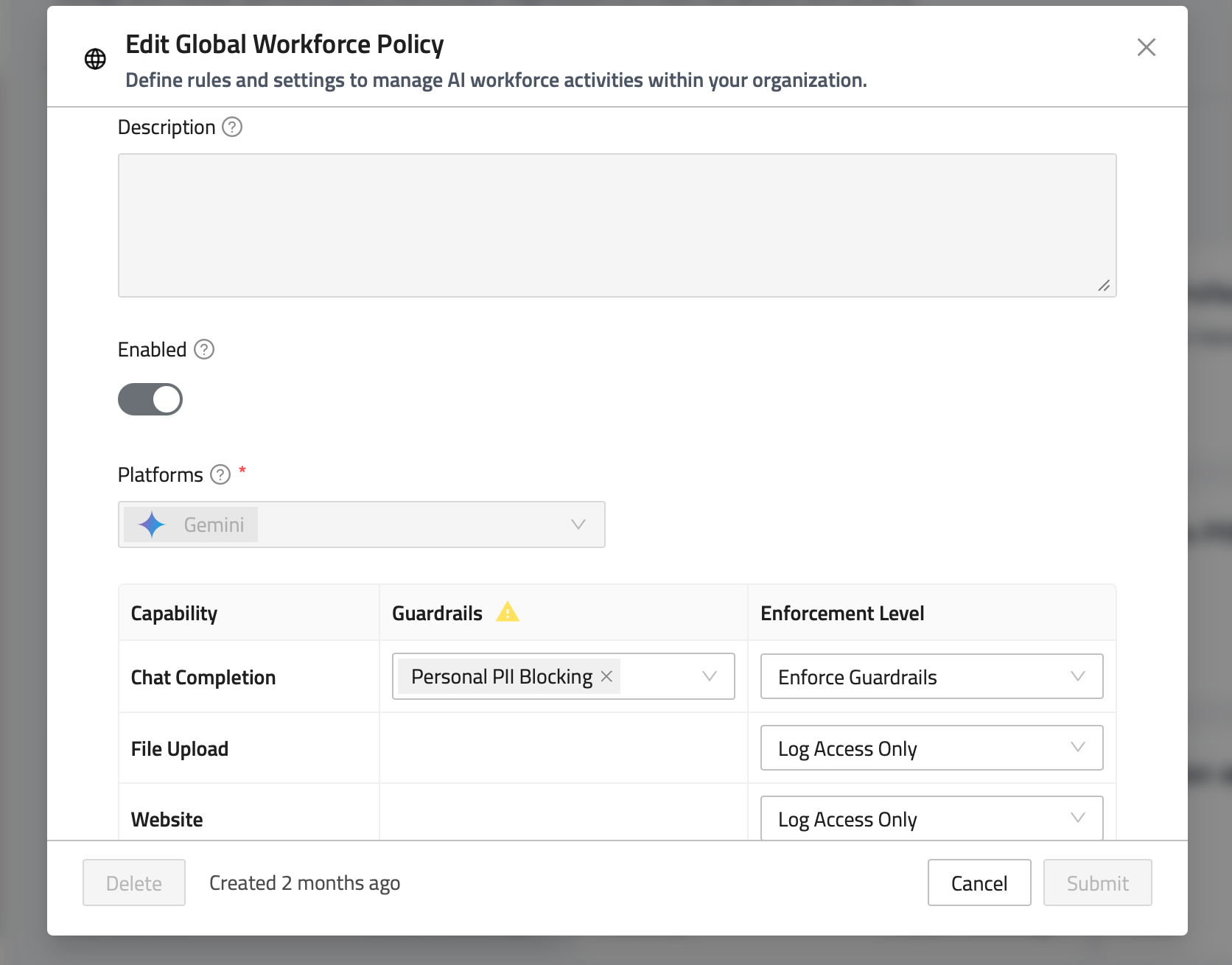
Heppner turned on the fact that confidential material was exposed to a third-party AI operator. FireTail's workforce monitoring sees prompts as they're entered, detects privileged or confidential content in real time, and applies policy at the prompt itself. Block, redact, or alert based on the rules the firm sets. The user keeps moving. The data stays inside the firm.
Govern AI agents and MCP-connected tools touching the DMS.
The newer surface that almost no one has visibility into is the agentic layer: AI systems quietly querying document management systems, calendars, and matter databases on their own. FireTail discovers MCP servers and AI agents wired into firm systems and governs what they can access, do, and produce.

Defend against runtime attacks on legal AI platforms.
The Vincent AI incidents show that the legal-specific AI platforms are themselves an attack surface. Prompt injection and credential theft happen at runtime, not in configuration. FireTail's runtime monitoring inspects AI interactions live and intervenes before manipulated prompts or hidden instructions cause damage.
Produce a defensible audit trail for clients, regulators, and courts.
Every AI interaction, policy decision, and finding is logged centrally. When a client sends ACC's questionnaire, when opposing counsel asks about AI in discovery, when a state bar inquiry asks how the firm enforces its policy, the answer is a complete record, not a summary of intent.
.png)
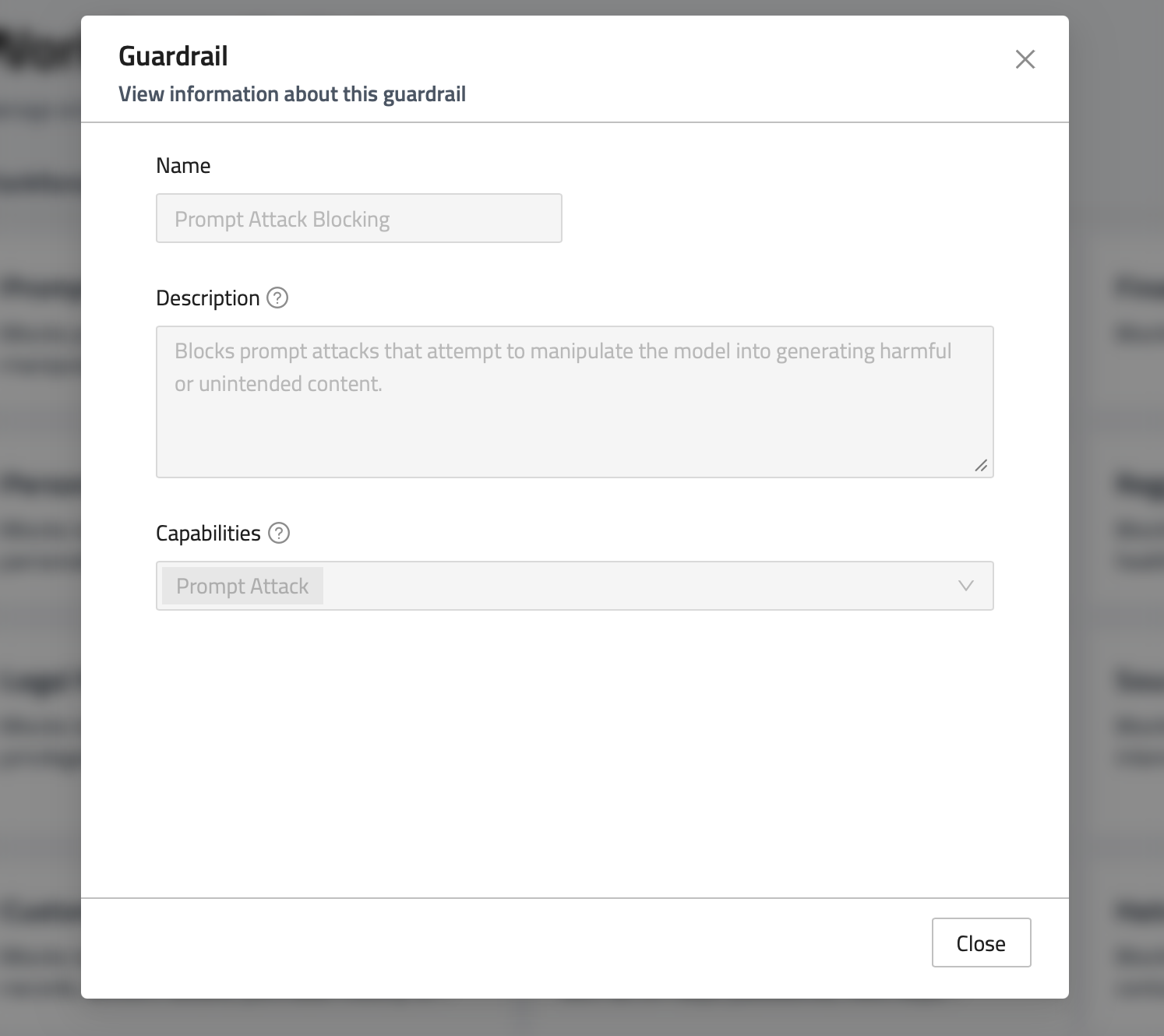
Move from blocking to enabling without losing control. Approve specific tools for specific work. Apply different policies to different practice groups, matters, and sensitivities. The most specific policy wins, so blanket rules can have surgical exceptions where the work demands them.
The bottom line for legal leaders
Firms cannot afford to block AI. The drafting, research, and operational gains are too significant, and the workforce is already adopting it with or without permission.
Firms also cannot afford to ignore the accountability gap. Client questionnaires are arriving with audit clauses attached. The bar has named the duties. The courts are pulling AI usage into discovery. The cost of being unable to answer has stopped being abstract. It looks like a lost engagement, a privilege fight, a bar referral, or a headline.
Govern AI with the same rigour the firm already applies to every other category of regulated information. That's what FireTail is built for.