How to see and control your AI token spend
AI providers send one number a month. Cost observability is how you turn that into something you can forecast, attribute and defend.

AI providers send one number a month. Cost observability is how you turn that into something you can forecast, attribute and defend.
Earlier this year Uber went through its entire 2026 AI budget in four months. A single two-hour coding session cost $1,200, and the company now caps each employee at $1,500 per tool per month. If a company that size can lose the thread on its AI spend that quickly, most teams can too. The bill is built to keep you in the dark.
AI has become one of the fastest-growing lines in the enterprise budget and one of the hardest to reason about. Most providers have shifted from subscriptions to utility pricing, and the invoice lands as a single token count. The detail behind that number stays with the provider: the split across providers, model families, versions, and input versus output tokens. Without that detail you can't forecast next month, you can't find the waste, and you can't defend the figure when finance asks about it. This is the part of AI governance nobody built yet, and it begins with the token, because the token is what you are billed on.
What observability means for cost
Cost observability comes down to answering 4 questions whenever you need to. How much are we spending? On what? By whom? And, is this normal? Today most teams answer all four at invoice time, when the money is already spent. FireTail answers them from the token up, in three steps.
See it
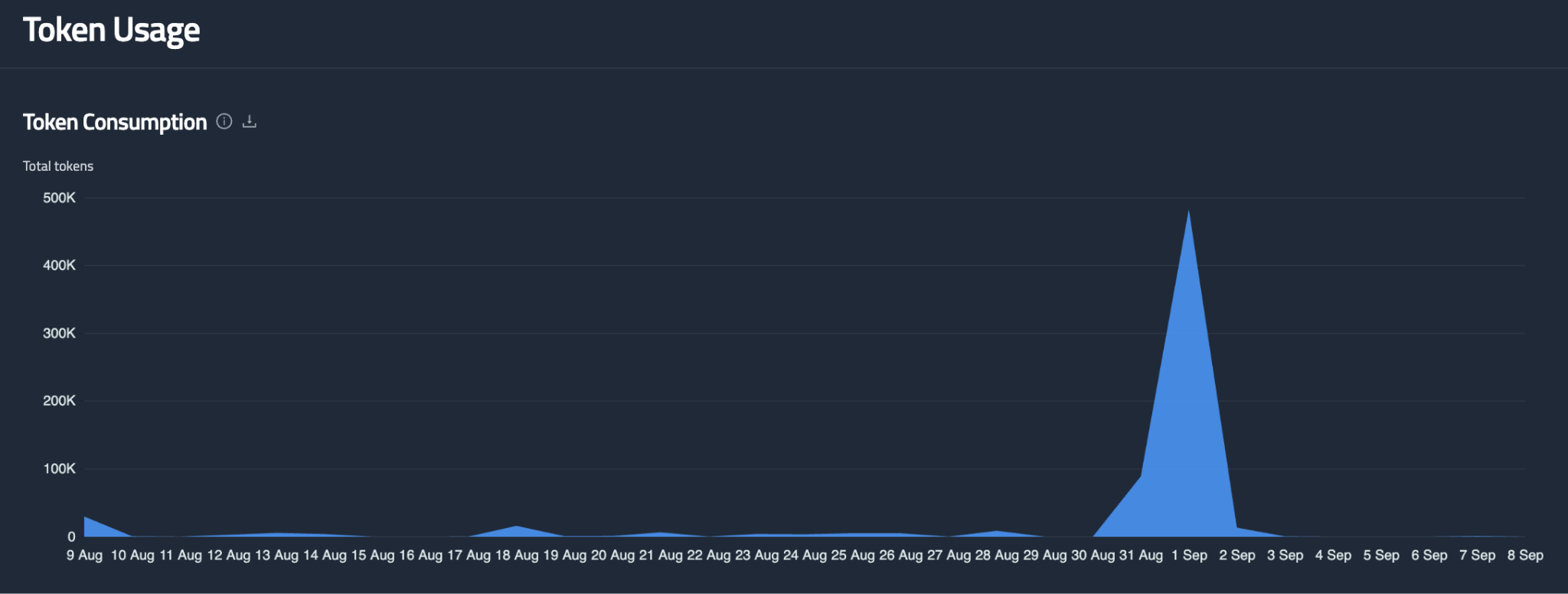
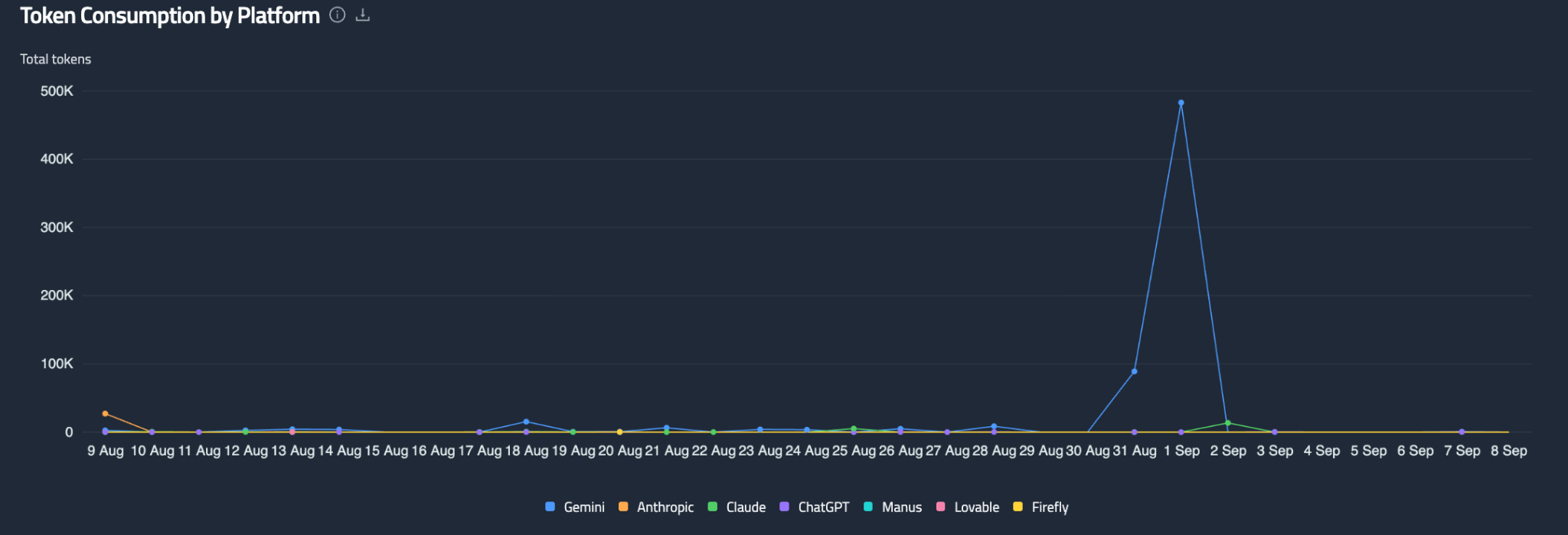
A single monthly total tells you nothing about the shape of your spend, and the shape is where the money goes. Consumption comes in surges, and every surge is spend you can no longer do anything about by the time the invoice explains it.
FireTail tracks token consumption as it happens, including for the providers that never hand back a count, and charts it across every provider on one timeline. The screenshot below is a month that looks unremarkable until the first of September.
Break it down
A total gives you nothing to pull on. Break it into the tools and models actually running and it becomes a set of choices: drop the tool nobody touches, look into the one that jumped last week, merge the two that do the same job. FireTail splits consumption by provider, by model and by tool, so the same spike you just saw comes with an explanation.
Own it
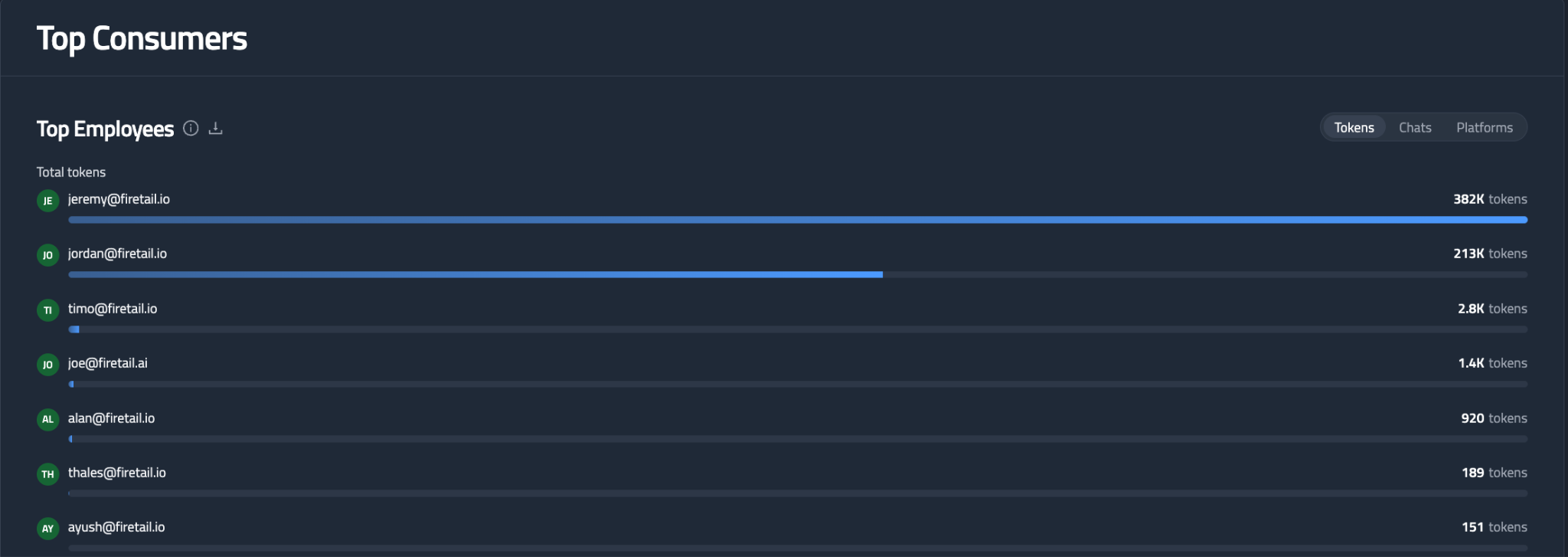
Spend without an owner never gets managed. Once consumption maps to people and teams, AI starts behaving like every other budget line: someone answers for it, unusual patterns get a second look, and an outlier becomes a conversation rather than a shrug. FireTail attributes usage down to the individual, so the question moves from how much did we spend to who is spending it and why.
Cost and risk on one record
This is the part a standalone FinOps tool can't reach. A spike in consumption is not only a budget event. It can be the first sign that an employee account or an AI agent has been taken over, or that an API key or token is being used by someone who shouldn't have it. In the first hours, runaway spend and a live incident look the same.
FireTail tracks consumption on the platform that already discovers your models, scores their risk and holds the inventory. So the spike doesn't arrive on its own. It arrives next to the model behind it, that model's risk score, and the identity making the calls. The cost anomaly and the security signal turn into one alert, worked by one team looking at one record, instead of two teams noticing two halves of the same event a week apart.
It also answers the question the invoice never can: what is this spend worth set against the risk it carries. You can only weigh those two things together when they live in the same place.
Run AI spend like a line of business
None of this caps your spend or throttles a model mid-call. What it removes is the reason AI cost stays a mystery, which is simply that nobody could see it, break it apart, or attach it to a person. You can't manage what you can't see, and you can't defend what you can't explain. FireTail makes AI consumption visible, attributed and accountable, so the spend gets run like any other line of business instead of turning up as a surprise at month end.
Get the full AI Cost Observability brief for the complete breakdown, or book a demo to see it against your own AI spend.