
Healthcare's AI Problem Isn't Adoption. It's Visibility.
Clinical and administrative AI is already inside every hospital. The question for security and compliance leaders is no longer whether to allow it, but whether they can see it, govern it and keep PHI out of tools that were never built to hold it.
.svg)
A clinician dictates a long note into an ambient scribe. A coder pastes a discharge summary into ChatGPT to clean it up. A revenue cycle analyst uses Copilot to draft a denial appeal that contains patient identifiers. An administrator drops a prior authorization request into a free AI summarizer to save twenty minutes.
None of it shows up in your security team's logs.
This is the AI reality inside every hospital and health system in 2026. Adoption is happening from the bedside to the back office, mostly through tools your security team did not approve and cannot see. In healthcare, that is not a productivity story. It is a HIPAA story.
The visibility gap is a PHI gap
Across all industries, 90% of AI usage is untracked, ungoverned and unsecured. 97% of organizations using generative AI have already faced security incidents linked to it.
In healthcare, those numbers describe a specific problem. Every untracked AI tool is a potential PHI exposure. Every ungoverned model is a potential audit finding. Every staff member quietly using a consumer LLM to make their day easier is a potential breach notification.
The traditional security response, block everything we did not approve, is not viable in healthcare. Clinical AI is improving documentation quality and reducing burnout. Administrative AI is recovering days from claims and revenue cycle workflows. Blocking it does not eliminate the risk. It pushes it underground.
.png)
The two bad options
Security and compliance leaders inside hospitals are stuck between two unacceptable choices.
- Block AI to protect PHI. The result is a security team seen as the obstacle to clinical innovation, with staff working around them anyway.
- Allow AI broadly and hope it goes well. The result is no audit trail, no PHI controls, and a HIPAA exposure that compounds every day.
Neither option enables AI adoption with confidence. The third option, govern AI instead of banning it, requires visibility, controls and compliance evidence most healthcare organizations do not currently have.
That is the gap FireTail closes.
What confident AI adoption looks like with FireTail
FireTail is HIPAA-compliant and operates under a signed Business Associate Agreement. It is the platform healthcare organizations use to move from blocking AI to governing it.
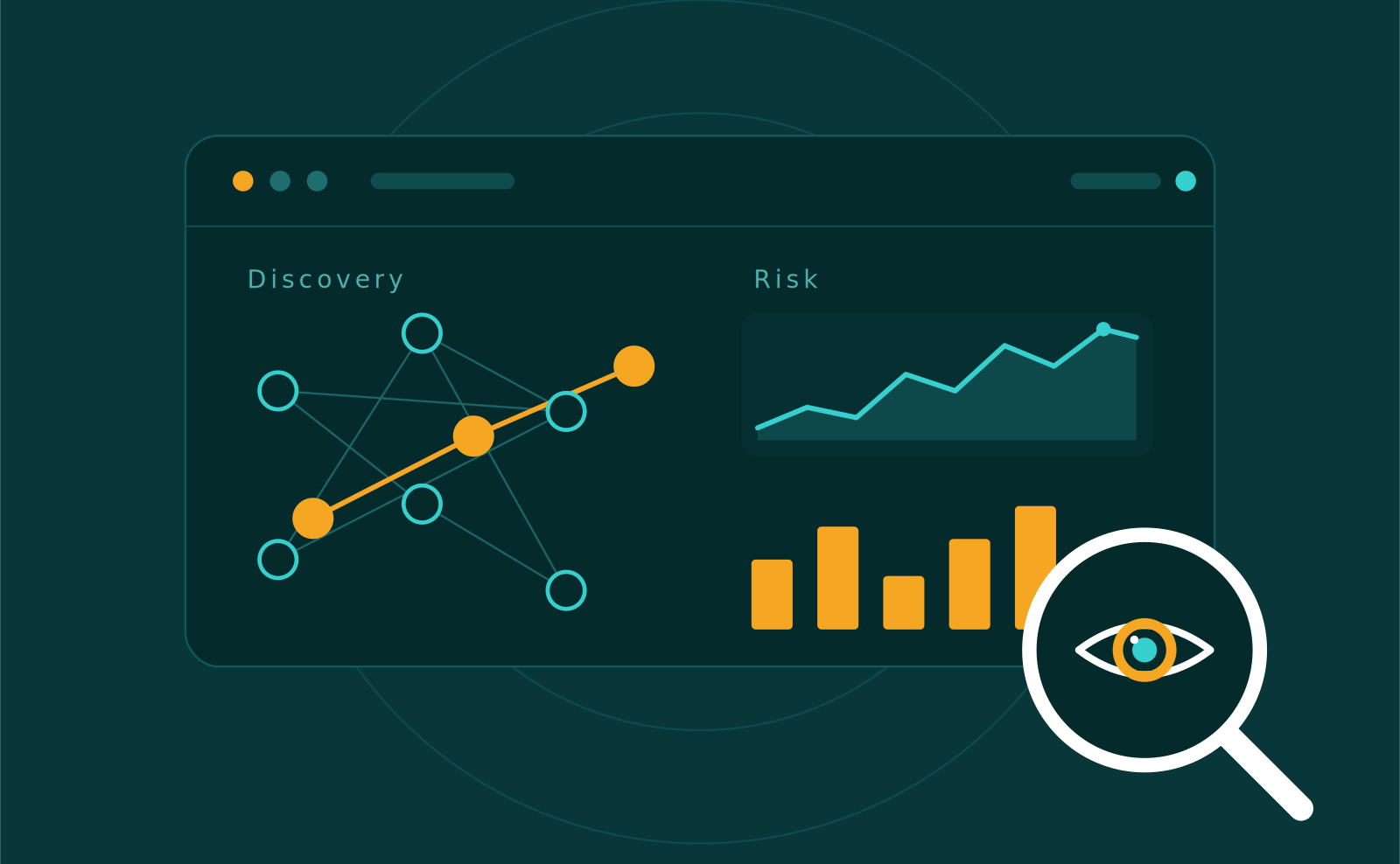
- Complete visibility into every AI tool, model and agent. FireTail's Continuous AI Discovery scans cloud environments, code repositories and employee endpoints to build a real-time inventory of every AI model and agent in use across your organization. That includes the sanctioned tools and the ones nobody told the security team about. You cannot govern what you cannot see. The first job is to see it.
- Real-time PHI detection at the prompt level. FireTail's Workforce AI capability monitors how clinical and administrative staff interact with AI tools. When a chart note containing patient identifiers is pasted into a consumer LLM, FireTail detects the PHI pattern in real time, applies policy at the prompt and either blocks, redacts or alerts based on the rules you set. The user stays productive. The data stays protected. The audit log captures everything.
- Policies that enable, not block. FireTail's AI Governance and Policy Engine replaces blanket bans with usage-driven guardrails. Allow approved AI for documentation workflows. Block PHI from leaving the network through unsanctioned tools. Apply different policies to different roles, departments and data sensitivities. Policies are aligned to NIST AI-RMF, OWASP LLM Top 10, MITRE ATLAS and ISO 42001, the standards your auditors and regulators are already asking about.
- Model-level risk scoring for clinical use. Not every AI model is appropriate for clinical work. FireTail's AI Security Testing generates granular risk scores for every model version in use, giving clinical informatics, compliance and security teams the evidence they need to approve specific models for specific use cases. Approved for documentation summarization. Not approved for clinical decision support. Audit-ready and defensible.
- Audit-ready compliance for HIPAA and beyond. Every AI interaction, policy decision and finding is logged and centralized. When OCR asks how you are protecting PHI in AI tools, the answer is not "we have a policy." The answer is a complete audit trail, a risk register and continuous evidence of control.
.png)
Deployed in days, not quarters
FireTail is built to deploy in days, not the multi-quarter rollout most healthcare security tools require. A typical AI assessment delivers a complete inventory of AI usage across the organization in 15 minutes. For a sector where the AI risk is compounding faster than procurement cycles can keep up, that speed is the difference between governing AI and chasing it.
The bottom line for healthcare leaders
Hospitals cannot afford to block AI. The clinical and operational gains are too significant, and the workforce is adopting it with or without permission.
Hospitals also cannot afford to ignore the PHI risk. The HIPAA exposure, the regulatory scrutiny, the breach economics and the patient trust implications are too serious to leave unmanaged.
The path forward is to govern AI with the same rigor your security team already applies to every other category of regulated data. FireTail is the platform built to make that possible.

.png)